
Floating rate bonds tend to receive less attention than shares or fixed rate bonds.
Yet in Australia, floating rate bonds are far from niche. They play a starring role in Australia’s credit market as the favoured source of debt funding by the major banks.

Floating rates are a familiar concept in our financial lives too, with most Australian mortgages structured on variable rather than fixed interest rates.
Floating rate bonds can also deliver important benefits in a diversified portfolio. By adjusting their interest payments as market rates change, they offer the potential for regular income, lower price sensitivity to interest rate movements and an additional source of diversification alongside other investments.
What are floating-rate bonds?
Like regular fixed income bonds, floating rate bonds are loans made to governments or companies that pay investors interest.
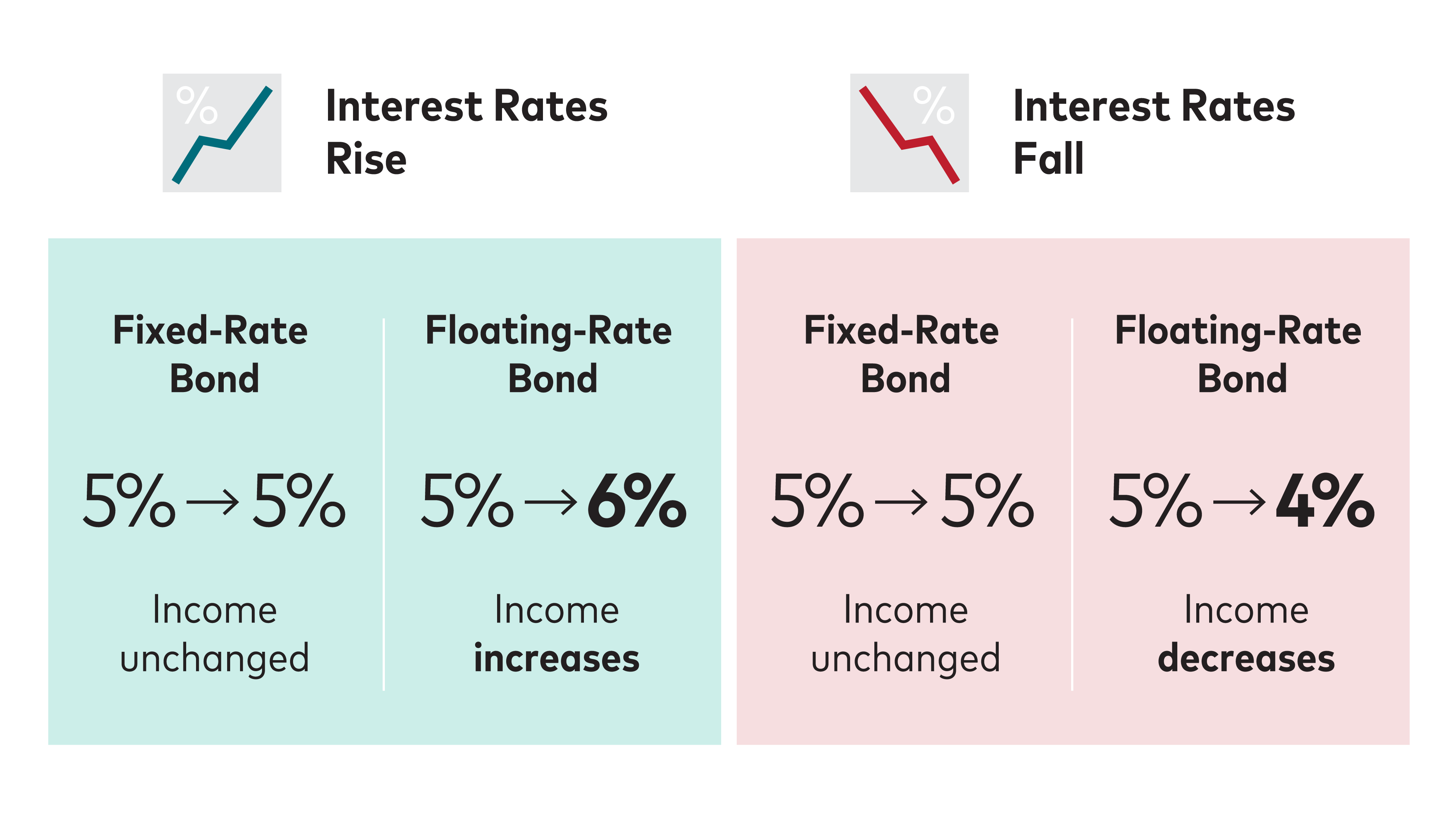
The key difference is that the interest payments on floating rate bonds can change over time. Rather than being fixed for the life of the bond, they typically move in line with short-term interest rates.
This means investors may benefit from higher income payments when interest rates rise, while still maintaining exposure to the defensive characteristics that bonds can provide.
Floating-rate bonds provide income that adjusts as interest rates change
Why investors use floating-rate bonds
Every investment plays a different role in a portfolio.
Shares can help drive long-term growth. Fixed income can help generate income and diversify risk. Cash can provide liquidity and stability. Listed property can also provide exposure to real assets and potential income, while behaving differently to shares, bonds and cash.
Floating rate bonds sit within the fixed income part of a portfolio but offer a different set of characteristics to fixed rate bonds.
1. Regular income
Many investors turn to bonds for income.
Because the interest payments on floating rate bonds adjust over time, the income generated by these securities can move with changes in market interest rates. This can make them an attractive option for investors seeking income from the defensive side of their portfolio.
2. Reduced sensitivity to interest rates
The value of fixed-rate bonds can be affected by changes in interest rates.
Floating-rate bonds are generally less sensitive to these movements because their interest payments reset periodically. As a result, their prices may experience smaller fluctuations when interest rates change.
3. Diversification
A well-diversified portfolio typically contains a mix of assets that can behave differently under different market conditions.
Floating-rate bonds can complement shares, cash and traditional bonds by providing an additional source of income and diversification.
Accessing floating rate bonds through a single investment
For many investors, building a diversified portfolio of individual bonds can be complex.
Exchange-traded funds (ETFs) provide a convenient way to access a broad range of securities through a single investment.
Where could floating-rate bonds fit in a portfolio?
There is no one-size-fits-all approach to investing, and every investor’s circumstances are different.
However, floating rate bonds may be worth considering for investors who are looking to:
-
Generate income from the defensive portion of their portfolio.
-
Diversify beyond shares and cash.
-
Reduce price sensitivity to changing interest rates.
-
Build a more balanced portfolio through exposure to different types of fixed income investments.
Importantly, floating-rate bonds are not intended to replace every other defensive investment. Instead, they can be used alongside cash, fixed rate bonds and other fixed income investments as part of a diversified portfolio.
A useful addition to the fixed income toolkit
Floating rate bonds have become an increasingly important part of many investment portfolios because they offer a unique combination of income potential, diversification and lower sensitivity to interest rate movements.
For investors looking to strengthen the defensive side of their portfolio, they may be worth a closer look.
Source: Vanguard
Reproduced with permission of Vanguard Investments Australia Ltd Vanguard Investments Australia Ltd (ABN 72 072 881 086 / AFS Licence 227263) is the product issuer. We have not taken yours and your clients’ circumstances into account when preparing this material so it may not be applicable to the particular situation you are considering. You should consider your circumstances and our Product Disclosure Statement (PDS) or Prospectus before making any investment decision. You can access our PDS or Prospectus online or by calling us. This material was prepared in good faith and we accept no liability for any errors or omissions. Past performance is not an indication of future performance. © 2026 Vanguard Investments Australia Ltd. All rights reserved. Important: Any information provided by the author detailed above is separate and external to our business and our Licensee. Neither our business nor our Licensee takes any responsibility for any action or any service provided by the author. Any links have been provided with permission for information purposes only and will take you to external websites, which are not connected to our company in any way. Note: Our company does not endorse and is not responsible for the accuracy of the contents/information contained within the linked site(s) accessible from this page.


